
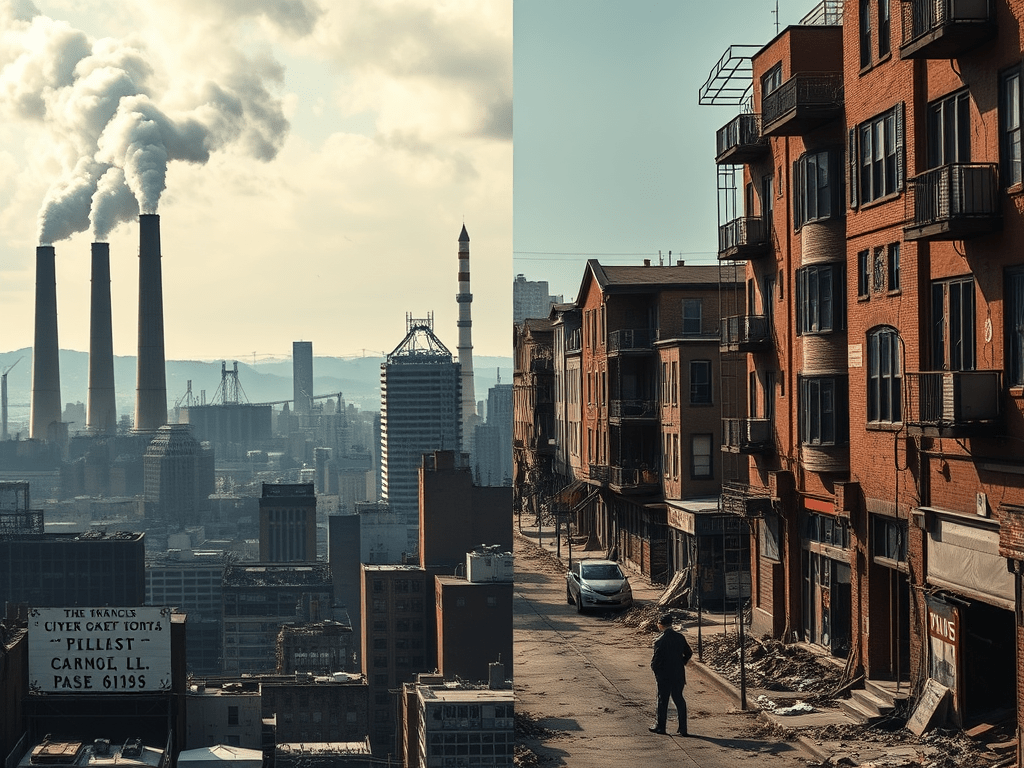
This is another in my series of Political posts looking at topics that I wished to investigate and provide an evidence based look at them.
This time I am looking at the historical evidence of the impact of Income Inequality on Political attitudes of the populus. This interested me because my gut reaction is that as inequality grows, the populus is more likely to become more left leaning and social democratic in attitude.
To prove or disprove this assumption firstly I will look at how income inequality has changed globally since 1900, using various respectable sources of evidence.
Then I will look at how the Economic shifts impacted on political attitudes, then I will examine the Risks and Opportunities arrising from these changes and finally I will summarise my findings.
The Long Arc: Income Inequality 1900–Today
1. Historical Trends in Global Income Inequality
A. The Early 20th Century: High Inequality, Global Divide
- According to data from the World Inequality Database (WID), global inequality (measured by ratios like top 10% vs bottom 50%) more than doubled between 1820 and ~1910. WID – World Inequality Database+2knowledge.eurodad.org+2
- By the early 1900s, inequality was at very high levels: global Gini (an inequality metric) estimates suggest it was very large. Irving Wladawsky-Berger+2Brookings+2
- Between-country inequality (rich vs poor countries) was a dominant driver: industrialised Western economies were pulling away from large swathes of the world. Brookings+1
B. Mid-20th Century: A Period of Relative Compression
- From ~1910 to ~1980, within-country inequality (inequality inside individual countries) actually declined on average. WID – World Inequality Database
- Meanwhile, between-country inequality (differences in average incomes across countries) continued to grow until about 1980, according to WID. WID – World Inequality Database
- According to a historical analysis, for a subset of 42 countries with long-run data, the global Gini coefficient was around 0.40 in 1900, rising to about 0.48 in 2000. Treasury
- According to Brookings’ review, global Gini peaked in late 20th century (circa 2000) at around 0.7 (on some scales), though exact numbers depend on methodology. Brookings
C. Late 20th Century to Today: Convergence + Rising Within-Country Inequality
- Since roughly 1980, within-country inequality has risen again: many countries (especially richer ones) have seen growing income gaps internally. WID – World Inequality Database+1
- At the same time, between-country inequality has declined meaningfully: countries like China and India have grown rapidly, closing the gap with wealthier nations. WID – World Inequality Database+2Our World in Data+2
- According to the World Inequality Report, the global Gini was ~0.72 in 1910, ~0.72 again in 2000, and fell to ~0.67 by 2020. WID – World Inequality Database
- Our World in Data shows that global income distribution has shifted: we moved from a very unequal, “two‑hump” world (poor vs rich blocs) to a more unimodal distribution as many poorer countries have caught up. Our World in Data
- The global median income has risen significantly: for example, between 2003 and 2013, the median annual income (in international $) almost doubled. Our World in Data
Political Implications: How These Economic Shifts Shape Political Attitudes
Given these deep economic changes, what political attitudes and movements have been shaped by this long-run inequality?
1. Early 20th-Century Political Tensions: Colonialism, Nationalism & Class
- The rampant between-country inequality in the early 1900s helped fuel anti-colonial nationalism. Many non-Western nations (colonised or semi-colonised) saw their poverty relative to Western powers as deeply unfair.
- Domestically, in early industrialised nations, inequality contributed to ideological divides: working-class movements (socialism, labour parties) grew in response to disparities, while elites defended existing economic structures.
2. Mid-Century Welfare State & Redistribution Era
- The decline in within-country inequality from ~1910–1980 coincided with the rise of the welfare state, progressive taxation, and expansion of social safety nets in many Western democracies. This corresponded to political consensus around redistribution, social democracy, and mixed economies.
- The political impact: broad support for public education, health, pensions; strong institutions; a belief in government’s role in reducing inequality.
3. Late 20th Century: Rising Internal Disparities & Backlash
- Since ~1980, as within-country inequality has surged, many citizens—especially in developed countries—have felt left behind. This has contributed to:
- Populist backlash: both left-wing (anti-elite, anti-corporate) and right-wing (anti-globalisation, anti-immigration) movements.
- Declining trust in institutions: governments, parties, and media are seen as serving the wealthy elite rather than the average citizen.
- Polarisation: richer and poorer segments diverge in their worldviews, especially on economic policy, taxation, and regulation.
4. Global Convergence & the Politics of Growth
- The decline in between-country inequality (as major economies catch up) has empowered emerging-market countries politically. Rising middle classes in China, India, and other places have changed global geopolitics and domestic expectations (e.g., demand for social mobility, political voice).
- However, within these rising nations, political inequality often persists (or even deepens), as growth may disproportionately benefit urban elites. This can breed domestic political tension, as inequality becomes more visible even as absolute incomes rise.
5. Institutional Trust & Generational Mobility
- Growing inequality within countries tends to correlate with lower social mobility. Empirical research (the Great Gatsby Curve) shows that countries with higher income inequality often have lower intergenerational mobility. Wikipedia
- Politically, this erodes the belief that “hard work pays off” and fuels cynicism: If people believe their children can’t meaningfully advance, they may demand more radical redistribution or structural change.
Looking Ahead: Risks and Opportunities
- Risk of entrenched populism: Continued high within-country inequality could strengthen populist movements, especially if global convergence slows or reverses.
- Redistributive pressure: With political awareness of inequality, there may be greater demand for wealth taxes, stronger social policies, or global governance reforms (e.g., coordinated tax on capital) to address very large global inequalities.
- Potential for global solidarity: If growth in emerging economies continues to lift millions out of poverty, there’s a chance for a more globally aligned agenda around social justice — though only if domestic inequalities are also tackled.
- Institutional reform: The erosion of trust could push for deep reforms in democratic institutions, economic systems, or tax regimes — especially if people perceive inequality as both persistent and unfair.
Conclusion
From 1900 to today, the story of global income inequality is not linear. It’s a tale of divergence and convergence, of old empires and new economic powers, of redistributive politics and rising populism. These economic shifts have deeply shaped political attitudes: fueling nationalism, welfare state expansion, backlash against elites, and renewed calls for reform.
As we move further into the 21st century, the interplay between inequality and politics remains one of the most important dynamics of our time. Understanding this history helps us grasp why voters think the way they do today — and where we might go next.
References & Further Reading
- World Inequality Database (WID): Global Income Inequality, 1820–2020 WID – World Inequality Database
- Our World in Data: The History of Global Economic Inequality Our World in Data
- Brookings Institution: Trends in Income Inequality: Global, Inter-country, and Within Countries Brookings
- IMF / Milanović: “Income inequality has risen over …” IMF
- Treasury.gov.au: Global poverty and inequality in the 20th century Treasury
Discover more from Hysnaps Politics, Gaming, Music and Mental Health
Subscribe to get the latest posts sent to your email.


3 thoughts on “The Poverty Politics: Income Inequality and its impact on Political attitudes.”