
Introduction:
In our previous posts, we’ve established a compelling connection between declining public investment in education and the rise of political polarization and radical attitudes across the UK and Europe.
Now, the crucial question remains: what can be done? How can education not only recover but also become a robust firewall against the forces that seek to divide and radicalize our societies?
The “Quality” Factor: More Than Just Spending
While the percentage of GDP spent on education is a vital indicator, it’s the quality and content of that education that truly shapes political attitudes.
- Cultivating Critical Thinking: A renewed focus on critical thinking, media literacy, and analytical skills across all subjects is paramount. This equips citizens to discern misinformation, challenge simplistic narratives, and engage with complex issues in a nuanced way, making them less susceptible to the siren call of extremist ideologies.
- Strengthening Civic Education: Comprehensive civic education, taught throughout a student’s journey, can instill a deeper understanding of democratic processes, constitutional values, and the importance of pluralism and compromise. This counters the feelings of political alienation that feed radicalization.
- Promoting Empathy and Tolerance: Education should actively foster empathy, respect for diversity, and the ability to engage in civil discourse with those holding differing views. Schools, as “labs for democracy,” are ideal environments to teach conflict resolution and understanding, thereby building social cohesion.
- Addressing Inequality: Reinvesting in education, particularly in disadvantaged communities, directly addresses the socio-economic inequalities that fuel resentment and disillusionment. When education provides genuine pathways to opportunity, it reduces the economic desperation that extremist groups exploit.
The Future of European Democracy: A Shared Responsibility
Reversing the trend of educational decline and political radicalization requires a concerted effort.
- Political Will: Governments, regardless of their political leaning, must recognize education as a long-term investment in democratic stability, not just a line item to be cut during austerity. The data suggests that left-leaning parties have historically shown a greater propensity for this investment, but it should be a bipartisan priority.
- Community Engagement: Schools cannot do it alone. Families, communities, and civil society organizations must work together to support educational goals and foster environments that promote civic engagement and critical thought.
- Adaptation: Educational systems must adapt to the challenges of the 21st century, including the digital information landscape, to teach students how to navigate an increasingly complex and often polarized world.
Visualizing the Solution: Education as a Bridge
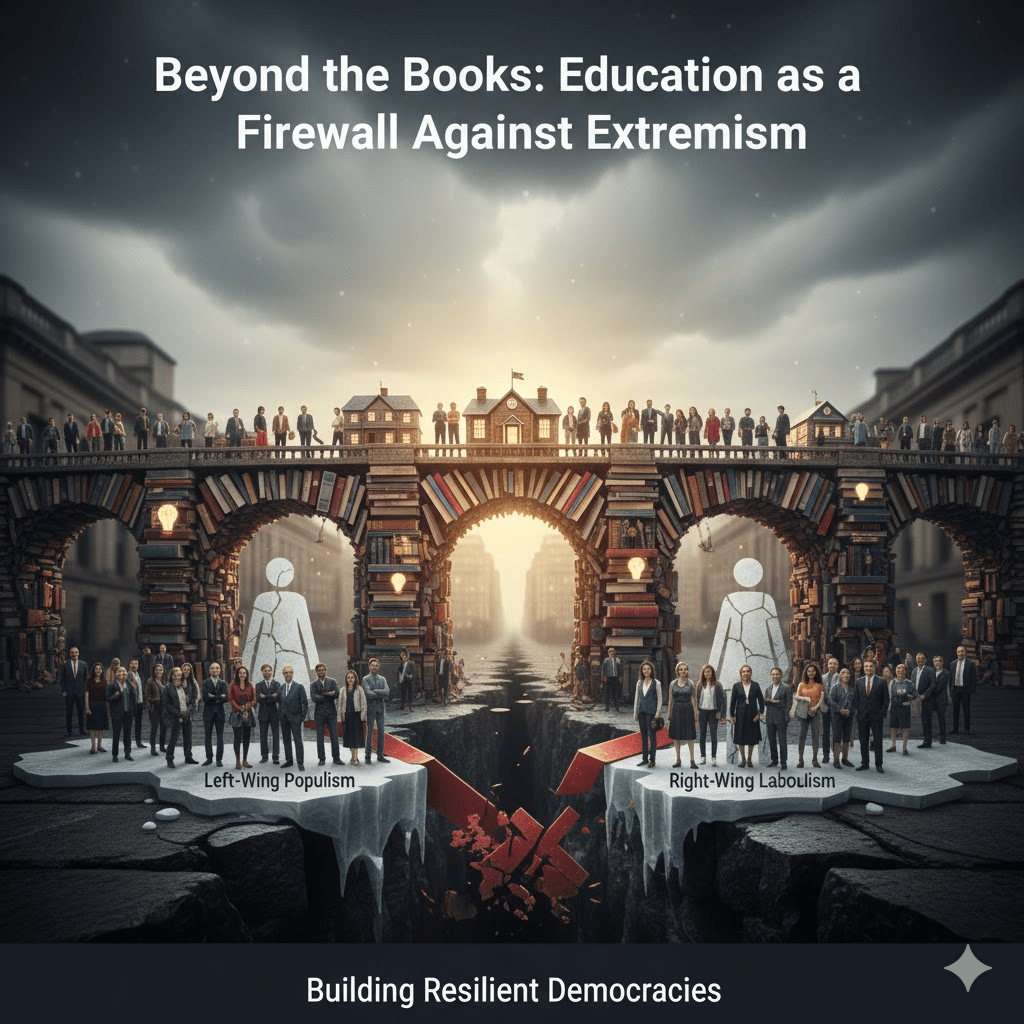
Hope you have enjoyed or at least been stimulated by this series of 3 posts.
Second post – The Money Trail: UK & European Education Spending – A Partisan Story of Polarization
last post – This one



Discover more from Hysnaps Politics, Gaming, Music and Mental Health
Subscribe to get the latest posts sent to your email.


One thought on “Beyond the Books: Education as a Firewall Against Extremism – Building Resilient Democracies”