
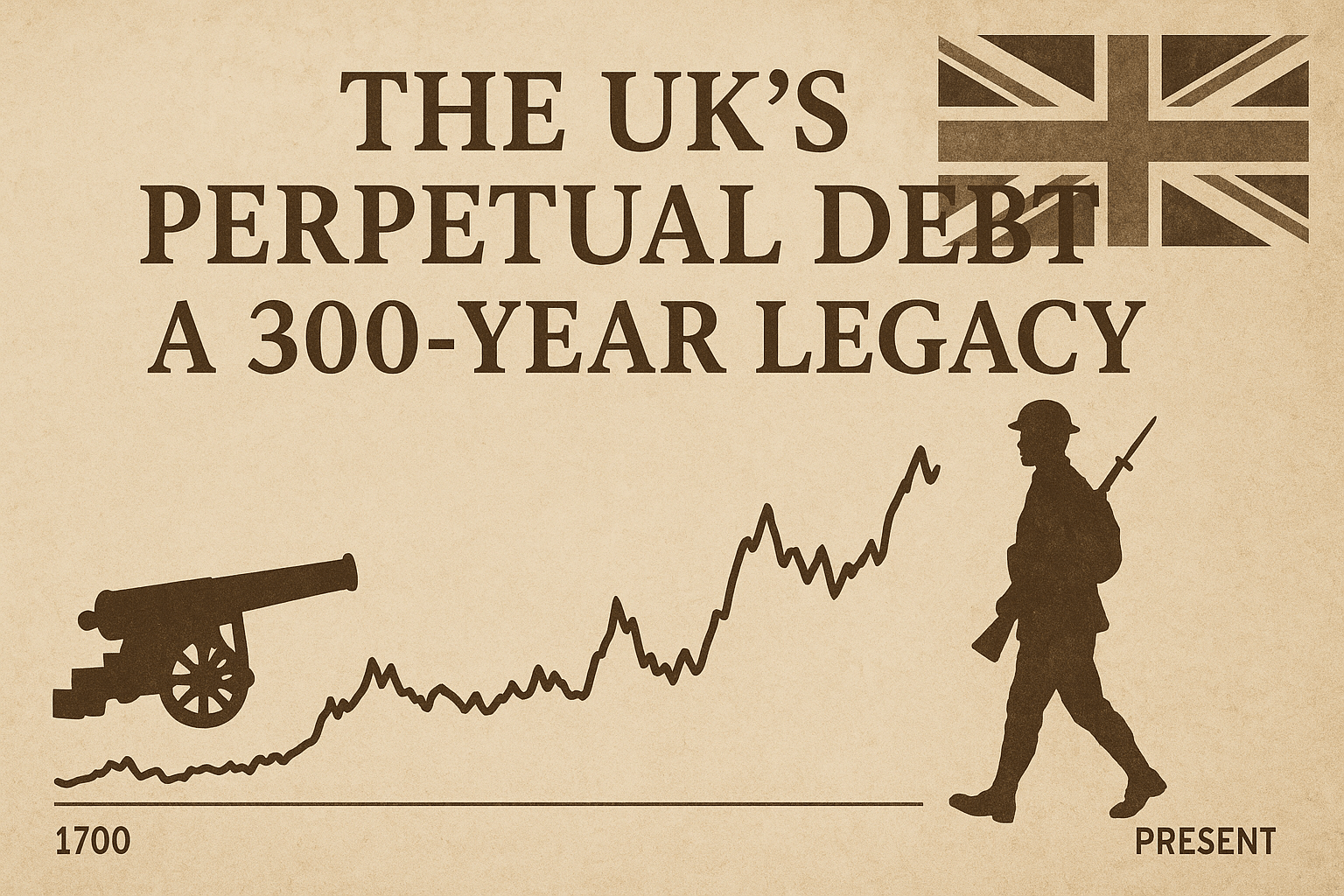
The Debt Anchor: The UK is Living on Borrowed Time—For 300 Years?
What started out as an interest in whether the sale of the Nation’s assets generated value for the country or not has led me to a nasty discovery.
Based on data available from the Office for Budget Responsibility (OBR), I am sorry to report that the UK has been living beyond its means for years, no, let me make that decades—actually, possibly even centuries. Yes, the UK Government has been in debt for over 300 years.
The 1900 Anomaly
If we look at the period since the turn of the last century, the country has had a nominal positive Government balance for 93 out of 123 years. Now, if this were your personal finances, you might think, actually, that’s not bad—that’s 75% of the time spending less than you earned.
But what we have to take into account is where we start. In 1900, although the government raised £193.5 million and nominally spent £193.3 million, resulting in a £200 thousand surplus, it also invested £36.13 million in long-term projects. This meant the net deficit for the year was £36 million. That would not be an issue if the long-term investments delivered future growth to repay the £36 million that had to be borrowed to fund them.
But wait—of the government’s spending, £20 million was on Debt Interest for the existing £705.7 million Public Sector Debt the Government already had.
The Weight of History: Debt to GDP
Yep, in 1900, the UK already owed over 3 times its annual Government income in debt, and paid roughly 10% of its income on Debt interest.
Was the UK at this time a high tax country? GDP was an estimated £1,886.53 million, so total taxation was roughly 10% of GDP and Government debt was 37% of GDP. To put this in context, currently the average Government Revenue to GDP for the world is 14.68% (Source: List of countries by tax revenue). The UK in 1900 had a tax regime similar to those currently in place in Syria, Indonesia, Ethiopia, and Paraguay.
So what was provided for this low level of taxation?
- A state pension? – NO
- A National Health Service? – NO
- Social Security to support the poor? – NO
- State funded education? – NO
- Armed forces? – YES – To be fair, most Government expenditure since $1500$ has been on Defence and the military, i.e., Nationalist Pride.
The Chief Driver: Defence and War
In fact, if we look at the figures available, the only government spending before 1856 was on Defence and Debt interest—in summary, current wars and past wars. From 1700 to 1856, the UK Government had accrued £828 million of national debt due to war. In 1856, the GDP for the nation was £826 million, meaning the total Government debt was equal to the total economic production of the country for a whole year (100% Debt-to-GDP), and this debt was accumulating interest at £28 million per year.
So, what was the UK Government spending its defence budget on? Well, let’s be honest—it was the Empire. The UK populace was paying to police the Empire.
Next Post Hook: This centuries-long cycle of debt was, for a time, successfully broken. How did the Victorian government manage to reduce debt through investment, new taxes, and peace? We examine the 1856 turning point and the financial winners of the costly conflict that preceded it: the Crimean War.


Discover more from Hysnaps Politics, Gaming, Music and Mental Health
Subscribe to get the latest posts sent to your email.


2 thoughts on “Dear UK Public – I have some bad news.”