
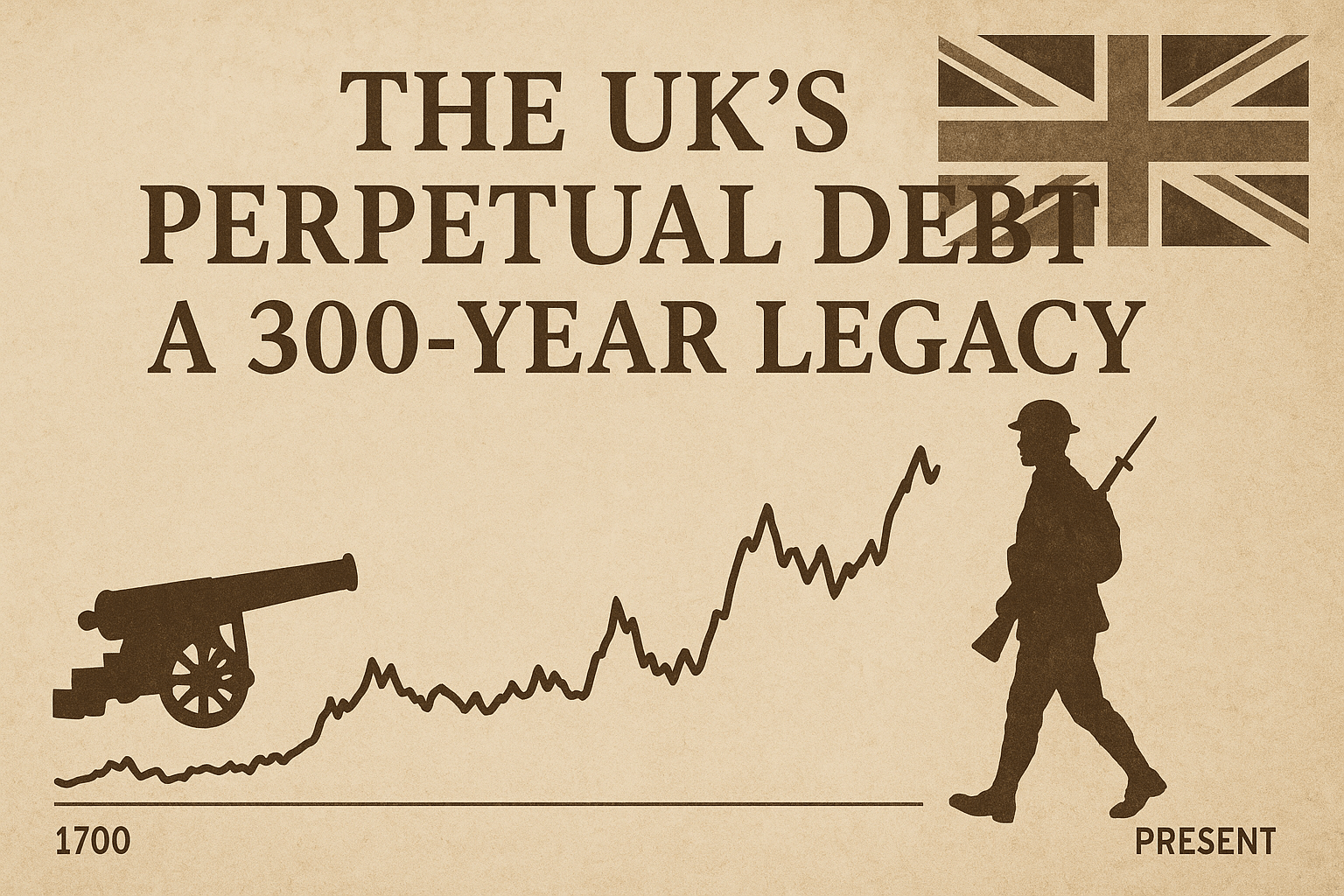
Well some of it..
The Victorian Debt Busters: Tax, Investment, and Relative Peace
The long-term debt cycle detailed in our previous post was defined by costly military action. Associated with the Empire and the need for goods to travel around the world, the UK had just been involved in the Crimean War (1853-1856), costing £51.1 million—nearly an entire year’s Government revenue. This conflict served as the final push that spurred a major fiscal shift.
Who Paid and Who Profited? (The Crimean War)
The Crimean War (1853-1856) was incredibly costly for the primary belligerents (Russia, Britain, France, the Ottoman Empire, and Sardinia-Piedmont) in terms of lives and national treasure. However, like most major conflicts, it created significant opportunities for specific sectors and individuals. The financial benefits generally flowed to those who supplied the armies, financed the conflict, or benefited from the disruption of traditional trade.
War Contractors and Industrialists
The most direct financial beneficiaries were the businesses that supplied the massive and often mismanaged Allied war effort.
- Shipping and Steam Navigation: The war required the rapid movement of huge numbers of troops and supplies to the remote Crimean Peninsula. Ship Owners and Shipbuilders in Britain and France experienced a boom, as the governments chartered or purchased large numbers of steamships. This was a significant opportunity, especially for the fledgling iron shipbuilding industry.
- Armaments and Uniform Suppliers: Despite the logistical failures, the sheer scale of mobilization meant huge contracts for weapons, ammunition, uniforms, and other essential equipment.
- Entrepreneurs and Inventors: The war was a testing ground for new technologies. Entrepreneurs involved in new communications (like early telegraphy), transport (like the railway built between Balaclava and Sevastopol), and medical supplies used the patriotic fervour to promote and profit from their enterprises.
Financial Institutions and Investors
Wars of this scale are financed largely through debt.
- Lenders and Financiers: Banks and wealthy individuals who subscribed to war loans issued by the British and French governments earned interest on this debt. The conflict provided a massive, guaranteed source of demand for capital.
- The Ottoman Empire’s Creditors: The Ottoman Empire, a key ally, had to borrow heavily from European powers (primarily Britain and France). The victory helped ensure the debt would eventually be repaid and gave the European powers increased financial leverage over the Ottoman government.
Neutral Parties and Merchants
- Non-Belligerent Powers: Countries like the United States and the various German states were able to gain commercial advantage. When Britain prohibited wartime trade with Russia (a major exporter of raw materials), merchants in neutral countries could potentially step in to resell Russian goods or provide alternative sources of supply, making a profit from the disruption.
In stark contrast, the war inflicted devastating economic costs on all belligerents, especially Russia, which saw its economy severely weakened.
The 1856 Turning Point
In 1856, the government began actively investing, and this became the only other type of expenditure apart from Defence and Debt repayment. So, what changed in 1856?
The government passed several key pieces of legislation:
- The Public Money Drainage Act 1856 and the Public Works Act (Ireland) 1856, which authorised the advance of money out of the Consolidated Fund for public works, fisheries, and employment of the poor.
- The County and Borough Police Act 1856, which made policing compulsory throughout England and Wales.
- The Joint Stock Companies Act 1856, which focused on the regulation and incorporation of joint-stock companies and associations.
In a lot of ways, 1856 was a major year for defining the UK of the future by committing to public services and controlled investment.
The Golden 44 Years: Debt Reduction
From 1856 to 1900, the Government actively reduced the total Public Debt. How did it achieve this?
- Through cutting services funded by the Government? – Nope.
- Through High Taxation? – Yes – They introduced income tax, inheritance tax, and return on investments, increasing revenue from £72 million per year to £118 million.
- And by not having a Major WAR. It wasn’t until the Boer War (1900) did the UK participate in a large war that broke nearly 50 years of relative peace, and no borrowing to fund a war.
Over the same time, the GDP increased nearly 250% (from £799 million to £1,913 million). As such, the Debt-to-GDP ratio decreased, from 103% to 34%, but also Tax revenues to GDP ratio decreased from 9% to 6%.
During this time the UK participated both directly and indirectly via such entities as the East India Company in numerous conflicts to maintain the Empire. These were funded by the Government and limited the overall reduction in Govt Debt. In a future post I will look at the value gained from these involvements and who benefited from the Nations participation. If your interested in the full list check out List of wars involving the United Kingdom in the 19th century
So, one of the few periods in our history where the Government managed to reduce its debt, it did it by investing in the Economy, raising new taxes, and NOT HAVING A MAJOR WAR. This doesn’t sound like austerity to me, but it does raise a question regarding how a government successfully invests to grow the economy. It also questions the assumption that raising taxes causes the economy to shrink.
Next Post Hook: This successful era of fiscal stability ended abruptly in 1898 with the push for Empire control in South Africa. We deconstruct the financial costs of the Boer War and who truly reaped the rewards of that conflict.

Discover more from Hysnaps Politics, Gaming, Music and Mental Health
Subscribe to get the latest posts sent to your email.

