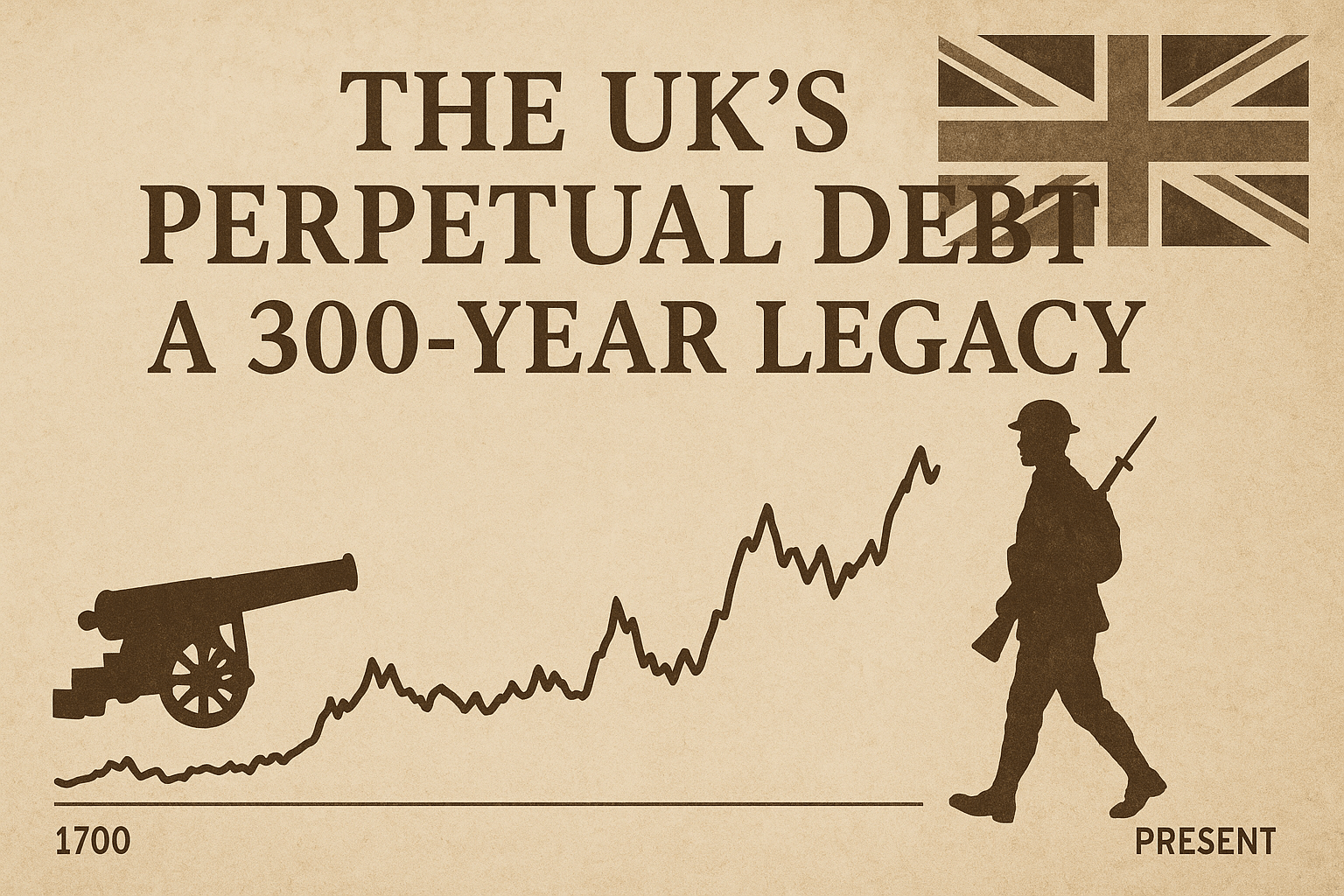
Over the last few posts, we’ve looked at how the UK’s national debt has been shaped by empire-building and war. That naturally leads to another question: did ordinary people in the 19th century push back against any of this?
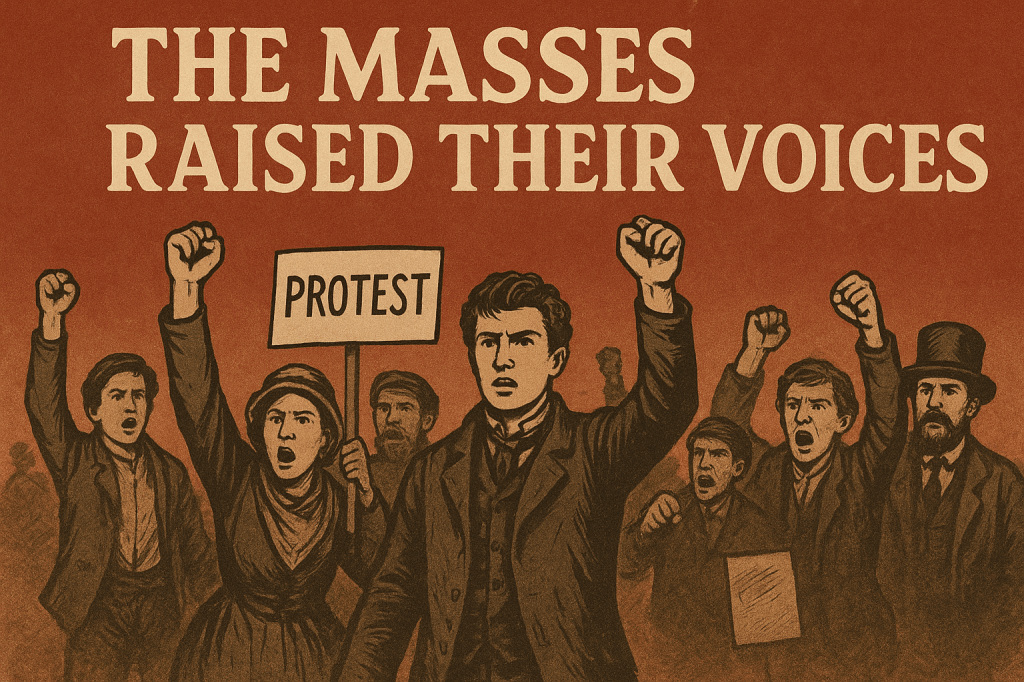
The short answer: yes—loudly, and often.
Unrest After the Napoleonic Wars
When the country came out of the long and brutal Napoleonic Wars, thousands of returning soldiers found themselves without work. Prices were high, wages were low, and frustration spread. This was the backdrop to a wave of unrest.
There were the machine-breaking Luddites in the 1810s. There was the failed armed march known as the Pentrich Rising. And soon after came the Peterloo Massacre, where a peaceful pro-democracy rally in Manchester was cut down by cavalry.
In the countryside, anger over wages, poverty, and new farming machines exploded into the Swing Riots. In Wales, miners and workers took control of Merthyr Tydfil during the Merthyr Rising.
These were not small, isolated moments — they were part of a broad wave of people demanding to be heard.
How the Establishment Responded
The government cracked down hard. Protesters were arrested, transported, even executed.
But the pressure kept building.
Eventually, it became impossible for Parliament to ignore the growing demand for reform. This gave us the first big political shake-up of the century: the Reform Act 1832.
This Act:
- Abolished dozens of corrupt “rotten boroughs” (tiny constituencies with big political power).
https://en.wikipedia.org/wiki/Rotten_borough - Gave representation to fast-growing industrial cities like Manchester and Birmingham.
- Standardised voting rules for men who owned property.
- Explicitly excluded women from voting for the first time.
Even then, only about 4–5% of adults could vote. So the demand for change didn’t stop.
The Push for Democracy Continues
By the late 1830s, the working-class movement known as Chartism was organising mass petitions and strikes across the country. They called for universal male suffrage, secret ballots, and pay for MPs. Some of the biggest flashpoints were the Newport Rising and the nationwide General Strike of 1842.
In Wales, anger at unfair tolls sparked the dramatic Rebecca Riots, where protesters disguised themselves and tore down toll gates at night.
These movements weren’t always successful in the moment, but they kept the idea of democratic rights alive — and impossible to ignore.
The Crimean War and Public Outrage
Public pressure also played a major role during the Crimean War. When journalists like William Howard Russell exposed the horrific conditions British troops were living in, the country was furious. This anger helped topple the government and pushed the state to improve military care.
It also gave rise to Florence Nightingale’s legendary mission to improve battlefield nursing:
https://en.wikipedia.org/wiki/Florence_Nightingale
And yes, the public even rioted about the army’s failures — most famously in the Snowball Riot in Trafalgar Square:
https://en.wikipedia.org/wiki/Snowball_Riot
The Second Reform Act: Democracy Expands Again
All this pressure eventually led to another major change: the Reform Act 1867.
By then, about one million men could vote. The Act doubled that number to two million — roughly 20% of adult men at the time.
It still wasn’t democracy as we’d recognise it. There was no secret ballot yet, and political intimidation was common. That came later through laws like the Ballot Act 1872 and the Corrupt Practices Act 1883, which made bribery and overspending illegal.
But the direction of travel was clear: people demanded representation, and the system had to adapt.
Why This Matters
The 19th century wasn’t just industrial change and Victorian values. It was a century of people fighting for political power — and slowly winning it.
When we hear that the UK Parliament is the “Mother of all Parliaments”, it’s worth remembering something important:
It became that not because the elite were generous, but because ordinary people pushed, protested, organised, and refused to stay silent.
The democratic rights we take for granted today weren’t gifts.
They were fought for.
Discover more from Hysnaps Politics, Gaming, Music and Mental Health
Subscribe to get the latest posts sent to your email.

