
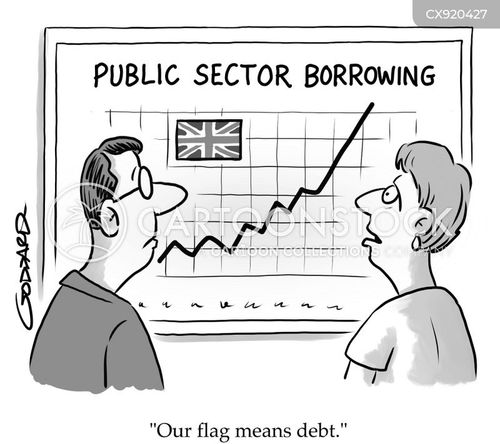
When people look at the national debt, two more “easy fixes” appear:
- Sell government assets to pay it down.
- Tax the rich heavily — surely they can cover it.
Both ideas contain a grain of logic.
Both ultimately fail to solve the structural issue.
And both misunderstand what my own earlier post on “The Real Cost of Civilisation” brilliantly explains:
That the price we pay via taxation is already far below what the private market would charge for equivalent services.
Let’s break these two solutions down.

1. Why Selling Assets Doesn’t Work
Governments have been selling assets for decades: utilities, land, rail, telecoms, housing stock.
The UK has already sold most of the easy things.
1.1 Selling an asset is like a household selling the car to pay this month’s credit card bill
Yes, it raises quick cash.
But after the sale:
- the car is gone
- you still need transport
- now you must rent or borrow at higher future cost
Governments face the same problem:
- Public land generates value
- State infrastructure earns income
- Utilities underpin national stability
Selling them is a one-off gain for long-term loss.
1.2 Asset sales rarely reduce debt sustainably
Historically, privatisation proceeds have tended to fund:
- tax cuts
- temporary boosts to spending
- political projects
Debt reductions rarely last.
The IOU disappears…
and the pressures that created it remain.
1.3 Selling major assets sends the wrong signal
If a government suddenly sells off:
- forests
- water systems
- transport corridors
- major buildings
- public estates
Markets read it as:
“Fiscal distress — the cupboard is bare.”
This increases borrowing costs, wiping out the short-term gains.

2. Why “Tax the Rich to Pay Off the Debt” Doesn’t Work Either
This idea feels morally compelling — many of the rich do pay too little tax relative to their wealth growth.
And your own post, “The Real Cost of Civilisation”, highlights something crucial:
We already underpay for public services relative to what they cost in the private market.
Tax is the subscription fee that keeps civilisation running.
But even recognising this truth, taxing the rich cannot, by itself, pay off the national debt.
Here’s why.
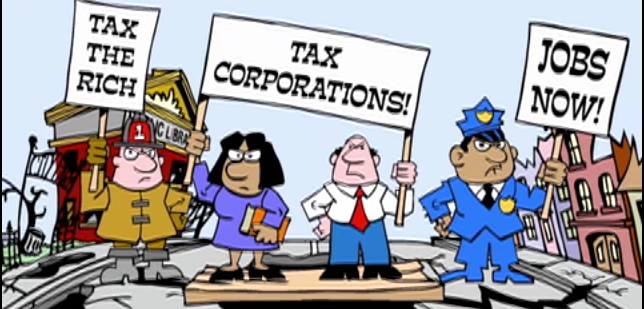
2.1 There simply isn’t enough taxable capacity at the top to clear the debt
Could higher taxes on the wealthy raise revenue?
Yes.
Could it pay off a debt approaching 100% of GDP?
No.
Even dramatic tax increases would raise tens of billions — valuable! —
but nowhere near the hundreds of billions needed to eliminate the debt.
This is not ideological.
It’s arithmetic.
2.2 Wealth is not the same as liquid taxable income
Much of UK wealth is held in:
- pensions
- property
- business equity
- illiquid assets
Taxing these requires either:
- selling them (which depresses the market), or
- borrowing against them (which ironically increases private debt)
You cannot force-convert national wealth into government revenue without breaking the system.
2.3 The rich are mobile — capital even more so
If taxation becomes punitive:
- people move
- companies relocate
- investment dries up
- tax receipts fall rather than rise
This isn’t a threat — it’s empirical observation from multiple countries.
Good tax policy raises revenue without driving away the revenue base.
2.4 Taxing the rich is vital for fairness — but it doesn’t eliminate the structural need to borrow
This is where your “Cost of Civilisation” post becomes essential context.
The issue is not:
“The rich aren’t taxed enough so the debt grows.”
It’s:
“The modern state is expensive, the public expects high-level services, and taxation is the subscription fee for civilisation — not a tool to eliminate long-term debt.”
We should absolutely tax the wealthy more effectively —
but as part of making the system fairer, not as a debt-eradication strategy.
⭐ THE BOTTOM LINE
Selling assets is a one-time fire sale that weakens the future, and taxing the rich — while necessary for fairness — cannot possibly erase the national debt.
Civilisation costs money.Taxes are the subscription fee.
And there is no shortcut that avoids the need for stable, continuous borrowing and long-term economic growth.



Discover more from Hysnaps Politics, Gaming, Music and Mental Health
Subscribe to get the latest posts sent to your email.


One thought on “Government Debt Solved: Why Not Sell Off Assets or Tax the Rich to Pay Off the Debt?”