
“So you thought you’d never understand financial markets…”
You were probably told that finance is complicated.
That it’s all maths, charts, Greek letters, and people much cleverer than you.
That’s convenient.
Because it means you’re not supposed to ask questions.
The truth is simpler — and more uncomfortable:
Financial systems aren’t hard to understand.
They’re hard to explain honestly.
So instead of textbooks and equations, here are films, games, and stories that do something far more dangerous:
They show you how the financial services behave when no one’s watching.
You’ll see:
- why risk keeps being hidden until it explodes
- why “responsible” decisions still cause disasters
- why governments panic when bond markets twitch
- why reform always stops just short of threatening power
You won’t learn formulas.
You’ll learn patterns.
And once you see those patterns — in a movie, a game, a story — you start recognising them everywhere:
in pensions, housing, debt, austerity, crashes, bailouts.
At which point finance stops being mysterious…
…and starts being understandable. Which, inconveniently. encourages questioning.
🧠 Terry Pratchett: Finance Explained by Accident (and Satire)
If you want to understand money, credit, trust, and systemic risk — Pratchett is unavoidable.

Going Postal (audiobook available)
Introduces:
- trust as infrastructure
- institutional fraud
- reputational collapse
- why money only works if people believe it does
It’s about a post office.
It is also about clearing systems, payment rails, and confidence.

Making Money (audiobook available)
This is the big one.
Covers:
- paper money creation
- banking regulation (and why it fails)
- moral hazard
- “too big to fail” logic
It is arguably the clearest non-technical explanation of why banking systems collapse that exists — precisely because it refuses to sound clever.

Raising Steam (audiobook available)
Less about finance directly, more about:
- industrial capital
- infrastructure investment
- disruption versus incumbents
- political resistance to economic change
A perfect companion piece for understanding why markets hate transition periods.
Pratchett’s secret weapon:
He removes jargon, and suddenly the system has nowhere to hide.
🧠 J Zachary Pike: Satire That Tells the Truth.


Orconomics (audiobook available)
A fantasy world where:
- heroic quests are securitised
- adventuring companies are publicly listed
- dungeons are assets
- risk is bundled, sold, insured, reinsured… and forgotten
Which is to say: modern finance, but honest about it.
It explains:
- moral hazard
- too-big-to-fail logic
- asset bubbles
- regulatory capture
- why the system cannot reform itself
…without once mentioning a balance sheet.
Son of a Liche (audiobook available)
This is the post-crash book.
Bailouts, zombie assets, and the political aftermath when the public realises they’ve been mugged but can’t quite prove it.
Uncomfortably familiar.
Dragonfired (audiobook available)
The long tail: austerity, populism, scapegoating, and the way elites survive crises by redirecting blame downward.
If The Big Short explains the crash, Dragonfired explains the decade after it.
📚 Other Fiction That Explains Markets Better Than It Should
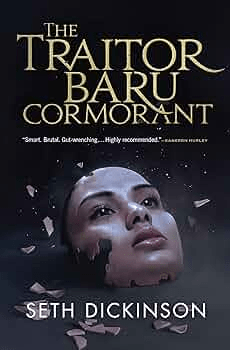
The Traitor Baru Cormorant – Seth Dickinson
This one is brutal.
Empire is maintained not by armies, but by:
- debt
- trade monopolies
- currency control
- fiscal dependency
It’s about economic warfare — how you conquer a country without firing a shot.
One of the clearest fictional explanations of IMF-style power dynamics ever written.
China Miéville – Perdido Street Station, The City & The City
Not about finance directly, but obsessed with:
- institutional inertia
- elites protecting systems that no longer work
- bureaucracies that know they’re broken and carry on anyway
Very “late-stage capitalism but with monsters”.
🎮 Games That Teach Markets Without Saying “Finance”
Democracy 1–4 (Positech Games)

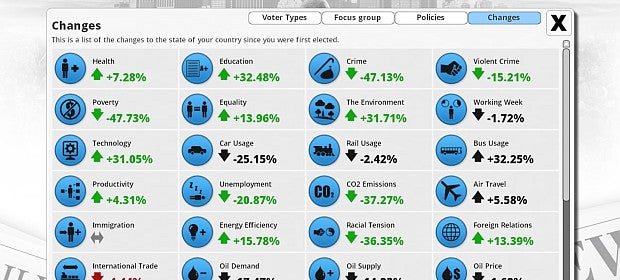
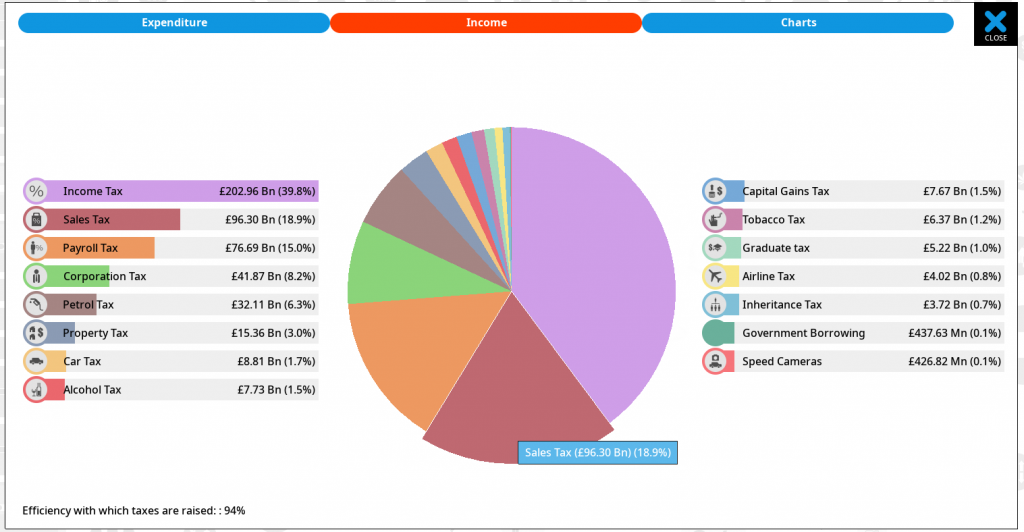
These are not politics games.
They are feedback-loop simulators.
You will learn:
- why bond markets discipline governments
- how debt, inflation, unemployment, and inequality interact
- why “doing the right thing” can still collapse confidence
- why timing matters more than intention
If you’ve ever wondered why governments keep making the same bad economic choices, Democracy explains it better than most economics courses.
And if you have ever wanted to try and create your political dream society – this is where to have a go.
(Do check the workshop: “Rural internet subsidies”, “Superannuation Guarantee”, “Trams and Progressive income taxes”… things get weird and extreme.)
Frostpunk


A masterclass in:
- austerity under constraint
- crisis economics
- moral trade-offs becoming policy norms
This is what happens when economic emergency powers never quite get rolled back.
EVE Online


A functioning player-run economy featuring:
- cartels
- insider trading
- market manipulation
- bank collapses
- asset freezes
No regulators. No bailouts.
Just incentives, scale, and human behaviour.
🎲 Tabletop Games (Playable via Tabletop Simulator)
These work exceptionally well in Tabletop Simulator because they strip markets down to first principles, they are also available as old style board games.

Brass: Birmingham
Set in industrial-revolution Birmingham, it teaches:
- capital constraints
- industrial investment
- debt timing
- boom/bust cycles
If you understand why you lose money doing the “right” thing too early, you understand markets.
Power Grid
- infrastructure investment
- price volatility
- first-mover advantage turning into a liability
A perfect illustration of how efficiency and resilience are not the same thing.

The Estates
- speculative bubbles
- asset inflation
- value created socially, captured privately
Short, brutal, and deeply uncomfortable.

Container
- production vs demand
- price discovery
- market collapse caused by over-optimisation
Possibly the most honest capitalism simulator ever made..
🎬 Films & Documentaries (the obvious ones, for a reason)


- The Big Short – pattern recognition disguised as comedy
- Inside Job – regulatory capture, plainly stated
- Margin Call – what institutions do when the numbers finally force honesty
These aren’t about clever people.
They’re about systems that reward denial until they can’t.
The Rethink takeaway
If you can:
- follow Making Money
- survive a term in Democracy 4
- keep a city alive in Frostpunk
- or lose spectacularly in Brass
then you already understand more about financial markets than most public debate assumes.
Which raises an uncomfortable question:
If markets aren’t that hard to understand…
why are we constantly told they are?
Because once finance becomes legible,
accountability stops being optional.
And that’s the part the system really finds complex.
Discover more from Hysnaps Politics, Gaming, Music and Mental Health
Subscribe to get the latest posts sent to your email.

