
The UK loses an estimated £7.5–£14.5 billion every year through political secrecy: VIP lanes, undisclosed lobbying, overseas donations, and suppressed corruption inquiries.
Brexit only promised £18 billion a year in benefit .. this would deliver .. with more guarantee a lot of that.
Evidence from Scandinavia shows that public tax and finance transparency reduces fraud, lowers inequality, and saves billions. The real crisis isn’t spending — it’s secrecy.
Tag Archives: Radical Braindump
Lets Rethink Fines: Shouldn’t We Base them on how much you have?
The UK’s fine system hasn’t kept pace with inflation or income, leading to unfair penalties and huge losses in uncollected revenue. This post explores how index-linking fines and adopting income-based penalties could raise £1.6–£2bn a year, improve court performance, cut reoffending, and strengthen trust in the justice system.
Why Boring Politics Might Save Us All
After over 27 days of digging through inequality, privatisation, democratic distortions, collapsing social care, slashed education budgets, chronic underinvestment, donor capture, and the small matter of Brexit, the conclusion is painfully obvious:
The UK’s political system isn’t broken.
It’s working exactly as designed — just not for most of us.
Yet ask any business leader, economist, or investor what they want and they’ll tell you the same thing:
“Please, stop swinging wildly between ideological extremes and give us something predictable.”
Please give us BORING politics
Boring politics is how countries become wealthy.
Boring politics is how crises are prevented.
Boring politics is how you attract investment.
Boring politics is how you rebuild trust.
Yes so at the end of this No wild solutions, just a plea for stability and long term thinking.
What Happens When We Stop Letting Money Run Our Politics?
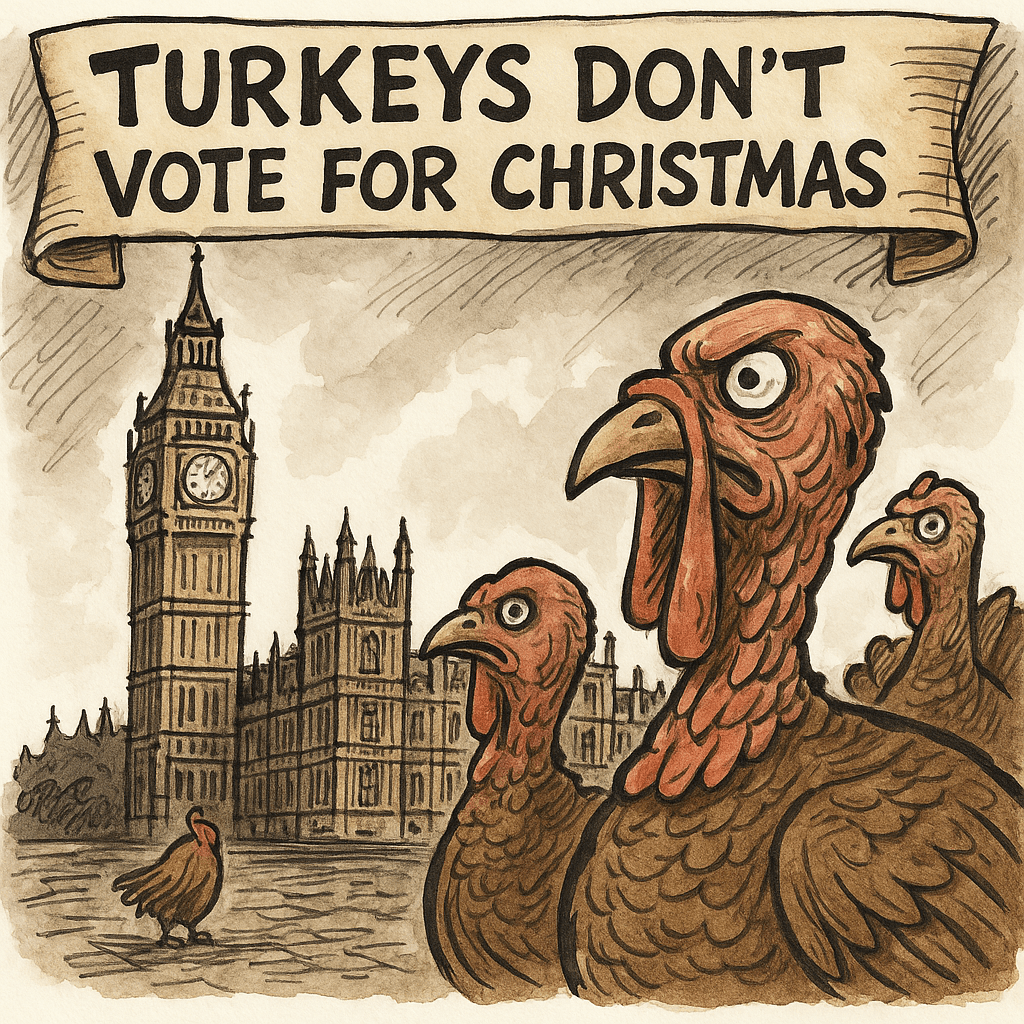
Britain is increasingly an outlier in how it funds political parties and election campaigns. While other democracies use public grants, matching funds, donation caps, or voter-controlled democracy vouchers, the UK still relies heavily on private wealth — creating distortions, donor influence, and barriers to participation.
This post explores how international public funding models work, how they reduce donor leverage, why they don’t restrict free speech, and what would happen if Britain adopted similar reforms. It also examines the overlooked “loss of deposits” rule, a financial barrier that disproportionately affects smaller parties and independent candidates.
