Has the War on Drugs delivered what it promised? Looking at fifty years of UK policy, this post explores drug use, harm, and public cost — not to win an argument, but to ask whether “being tough” turned out to be an especially expensive way of managing a persistent human behaviour.
Tag Archives: Social Inqeuality
Lets Rethink Policy-Making: Illegal Drugs – A cheaper alternative.
Let’s Rethink Policy-Making: Filthy Lucre
What happens if we stop pretending the illegal drugs market will disappear? Using conservative figures for England & Wales, this post explores how costs, criminal profits, regulation, and incentives interact — and why redesigning where money flows may matter more than repeating moral arguments.
Lets Rethink Policy-Making: Illegal Drugs – Who’s Been Getting Rich.
Let’s Rethink Policy-Making: The Filthy Lucre.
What happens when the public cost of managing illegal drugs is larger than the market itself? Looking at England & Wales data, we explore why drug use persists, how costs accumulate across health, crime and social services, and why pretending demand can be driven to zero may be one of the most expensive policy assumptions we make.
Why Boring Politics Might Save Us All
After over 27 days of digging through inequality, privatisation, democratic distortions, collapsing social care, slashed education budgets, chronic underinvestment, donor capture, and the small matter of Brexit, the conclusion is painfully obvious:
The UK’s political system isn’t broken.
It’s working exactly as designed — just not for most of us.
Yet ask any business leader, economist, or investor what they want and they’ll tell you the same thing:
“Please, stop swinging wildly between ideological extremes and give us something predictable.”
Please give us BORING politics
Boring politics is how countries become wealthy.
Boring politics is how crises are prevented.
Boring politics is how you attract investment.
Boring politics is how you rebuild trust.
Yes so at the end of this No wild solutions, just a plea for stability and long term thinking.
Computer Says ####: Why you should never Trust A Computer

AI and ML are great tools, they are not Experts. You need to validate what they tell you. a story of how my last blog post could have told a totally different story if I had not sense checked it and validated the calculations the computer did.
Civilisations Real Cost: UK Tax vs. The Private Market Price Tag

What Your Tax Really Buys: It’s Not a Bill, It’s a Bumper Policy! 🛡️Stop thinking of tax as a deduction—start seeing it as a collective insurance policy against life’s biggest expenses.
Reform Isn’t Trumpism: What Trotsky Can (and Can’t) Teach Us

Using Trotsky’s classic 1930s analysis of fascism, this post explains how modern UK politics compares to the US experience of Trumpism — and why Nigel Farage and Reform UK, despite sharing some populist themes, are not the British MAGA. A clear, evidence-linked look at inequality, class, media, trust, and identity shaping two democracies under similar pressures but radically different outcomes.
Trotsky Predicted Trump: What Trotsky Can (and Can’t) Teach Us.
Did Leon Trotsky accidentally predict Trumpism? In 1932, Trotsky described how fascism grows out of economic crisis, political paralysis, and a disillusioned middle class. When you compare that with late-20th and early-21st century America, the similarities are… uncomfortably recognisable. But the differences matter just as much. Here’s what Trotsky gets right — and where the comparison breaks down.
The Unhappy Masses: 19th Century Public Protests
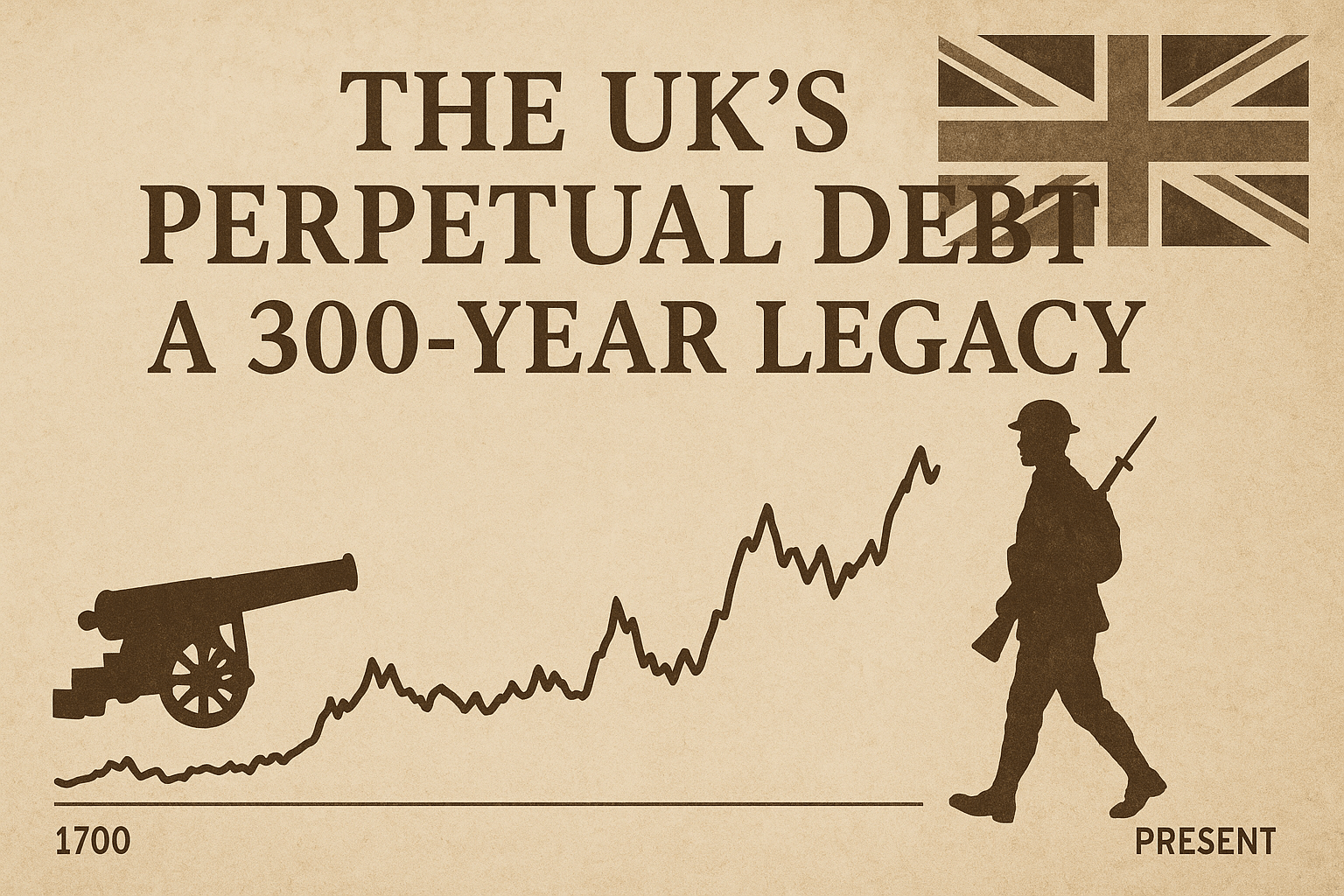
Over the last few posts, we’ve looked at how the UK’s national debt has been shaped by empire-building and war. That naturally leads to another question: did ordinary people in the 19th century push back against any of this?
The short answer: yes—loudly, and often.
Beyond the Books: Education as a Firewall Against Extremism – Building Resilient Democracies

The post emphasizes the link between declining public education investment and rising political polarization in the UK and Europe. It advocates for prioritizing quality education, focusing on critical thinking, civic education, empathy, and addressing inequalities to build a more cohesive society. Collective action from governments and communities is essential for reversing these trends.
