
Lets Rethink Fire Services: The Hidden Hero’s

The Fire Service: The Public Service Britain Forgot to Break — And Why It Quietly Succeeded

For the last quarter-century, almost every major public service in Britain has been pulled apart and stitched back together again.

The NHS endured wave after wave of restructuring.
Schools ricocheted from LEAs to academies to trusts.
Probation was privatised, then un-privatised.
Policing became a casualty of political formulae no one understands.

But one service — almost by accident — avoided the chaos.

The Fire and Rescue Service.

No internal markets.
No academisation.
No “transformational frameworks”.
No outsourcing lobby hovering over the budget line.

And while everything else was in flux, the fire service quietly did something astonishing:

Lets Rethink HealthCare: Doctors, Demand, and the Cost of Not Planning.

Lets Rethink HealthCare: Doctors, Demand, and the Cost of Not Planning.
We’re often told the NHS struggles because demand is unpredictable, people don’t want to be doctors anymore, or because training more staff is simply too expensive.

None of that is really true.

Demand has been rising for decades, driven by an ageing population and more complex care. Medicine remains hugely oversubscribed. And the cost of training enough doctors turns out to be similar to the economic value we currently lose by relying on a highly mobile workforce.

This post walks through how we got here, why the system quietly locked itself into dependence on overseas recruitment, what it would actually cost to fix both the future demand and the inherited deficit — and whether a redesigned model could still be working 50 years from now.

It turns out the NHS doesn’t have a money problem.

It has a planning problem.

Lets Rethink HealthCare: Another Broken Promise.

Ok so I ended the last post saying I wasn’t going to do this –

But I then got interested in investigating a few possibilities – so here we are.

WHAT A STABLE, MODERN, NON-FRAGMENTED NHS SHOULD LOOK LIKE FOR THE NEXT 30 YEARS
Other countries rearrange their health systems about as often as they repaint post boxes.
We rebuild ours like a kitchen remodel every election cycle.

So let’s explore systems that actually work — and what they teach us.

Lets Rethink HealthCare: What Other Countries Do.

AND WHAT THE UK COULD LEARN

The UK is not alone in running a universal health system.
But it is almost unique in constantly rebuilding its health architecture.

Other countries rearrange their health systems about as often as they repaint post boxes.
We rebuild ours like a kitchen remodel every election cycle.

So let’s explore systems that actually work — and what they teach us.

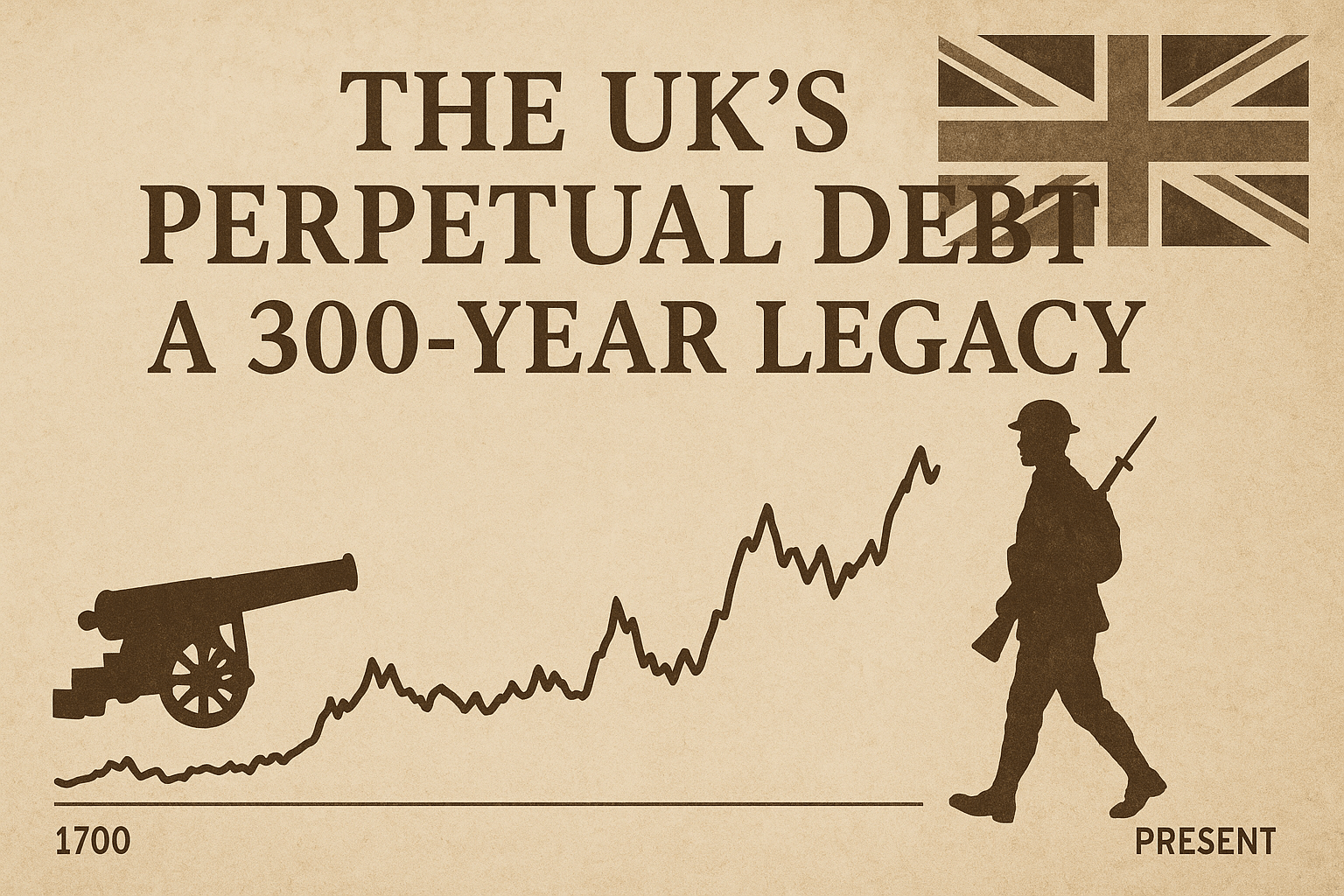
UK Government Debt: A visual guide

So a bit bored waiting for new year’s eve to arrive, I thought I’d let googles NotebookLM have ago at producing a small video to explain one of my series.

I decided to give my series on Uk Government Debt the honour – so below is an AI generated video (cos I really have no good skills at this) providing a 6 min guide to the UK Government Debt addiction.

Lets Rethink HealthCare: Why Competition would Never work.

STRUCTURE, ECONOMICS AND INCENTIVES

In Part I we saw how the internal market emerged.

Part II explains why it never achieved what its architects intended.

The answer lies not in ideology, but in economics and structure.

Lets Rethink HealthCare: Reforms, Fragmentation and a Paradox.

There’s a line often attributed to the Roman army:
“The only constant is change.”

If that doesn’t describe the NHS, nothing does.

And during the 1990s, when yet another restructure rolled in, someone in a Birmingham hospital taped a follow-up note to the management accounts department wall: (this was in a time before email – yes ask your historians there was such a time)

“Due to further cuts, the light at the end of the tunnel has been switched off.”

Dark humour, yes — but also a quiet acknowledgement that the NHS experiences more structural churn than almost any other health system on earth.

To understand why the NHS looks the way it does today, and why Birmingham is a perfect case study, we have to go back to the beginning of the internal market era.

Why Boring Politics Might Save Us All

After over 27 days of digging through inequality, privatisation, democratic distortions, collapsing social care, slashed education budgets, chronic underinvestment, donor capture, and the small matter of Brexit, the conclusion is painfully obvious:

The UK’s political system isn’t broken.
It’s working exactly as designed — just not for most of us.

Yet ask any business leader, economist, or investor what they want and they’ll tell you the same thing:

“Please, stop swinging wildly between ideological extremes and give us something predictable.”

Please give us BORING politics

Boring politics is how countries become wealthy.
Boring politics is how crises are prevented.
Boring politics is how you attract investment.
Boring politics is how you rebuild trust.

Yes so at the end of this No wild solutions, just a plea for stability and long term thinking.

Is Democracy Expensive?

People often assume politics is extravagantly expensive: parties splurging millions, donors buying influence, elections being giant money-burning exercises.

So here’s the real question:

What would it cost if the Government paid all legally allowed campaigning costs – national and local – instead of political parties and donors?

I’m going to calculate it at the absolute maximum legal spending, assuming: